Most advice about body confidence treats it as a mindset switch — decide to love your body, and the discomfort disappears. In practice, almost nobody experiences it that way. Comfort in your own skin tends to arrive gradually, through repeated, small exposures to the thing that used to feel threatening, rather than through a single moment of realisation.
Comfort is built, not decided
This is a well-documented pattern in how people overcome most forms of social anxiety, and body-related discomfort is no exception. The fear response to being seen — that specific, hot flush of vulnerability — weakens with repeated, safe exposure and barely moves at all in response to willpower alone. That’s why people who’ve spent time at naturist beaches, in changing rooms, in life drawing classes, or simply spending unselfconscious time undressed at home, tend to report a genuine, lasting shift, while people who simply try to think their way into confidence usually don’t.
Start smaller than feels necessary
The mistake most people make is choosing too large a first step — a crowded beach, a busy club — and then treating the resulting panic as evidence that this isn’t for them. A more realistic approach starts much smaller: time alone at home without clothes, an early-morning or off-season visit to a quiet naturist beach, a single sauna session at a mixed spa. Each small, survivable exposure does more to build genuine comfort than any amount of reading or resolution.
The role other people play
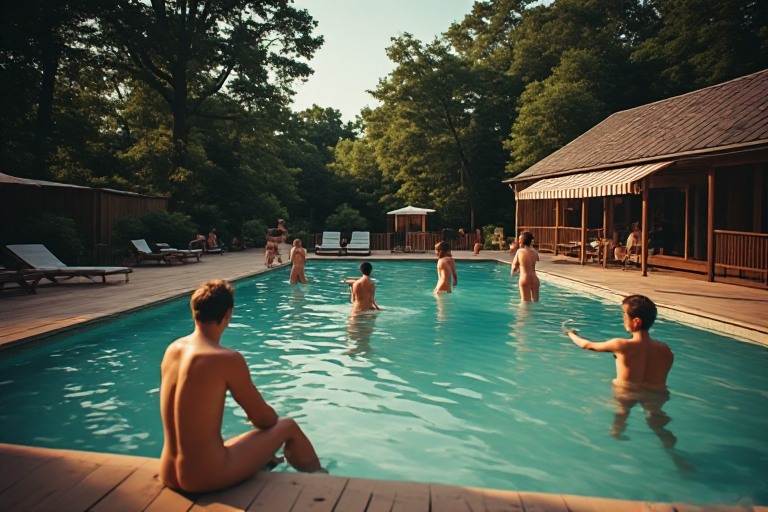
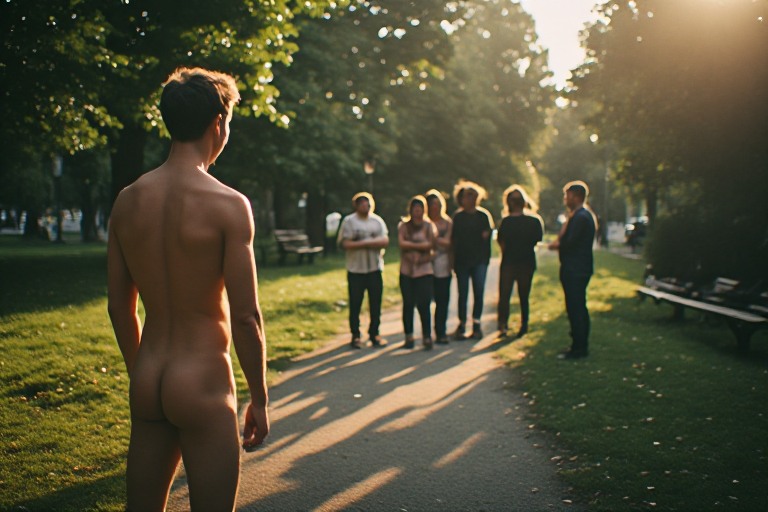
One of the more counterintuitive findings, reported consistently by people who’ve made this shift, is that other people’s presence — specifically, other ordinary, non-judgemental people who are also undressed — accelerates the process rather than slowing it. Seeing real, unedited bodies going about an ordinary day does more to dismantle unrealistic body expectations than any amount of solitary reflection. This is part of why naturist spaces, rather than simple private nudity, tend to produce the deepest and most durable shift in how people relate to their own bodies.
It isn’t really about the body
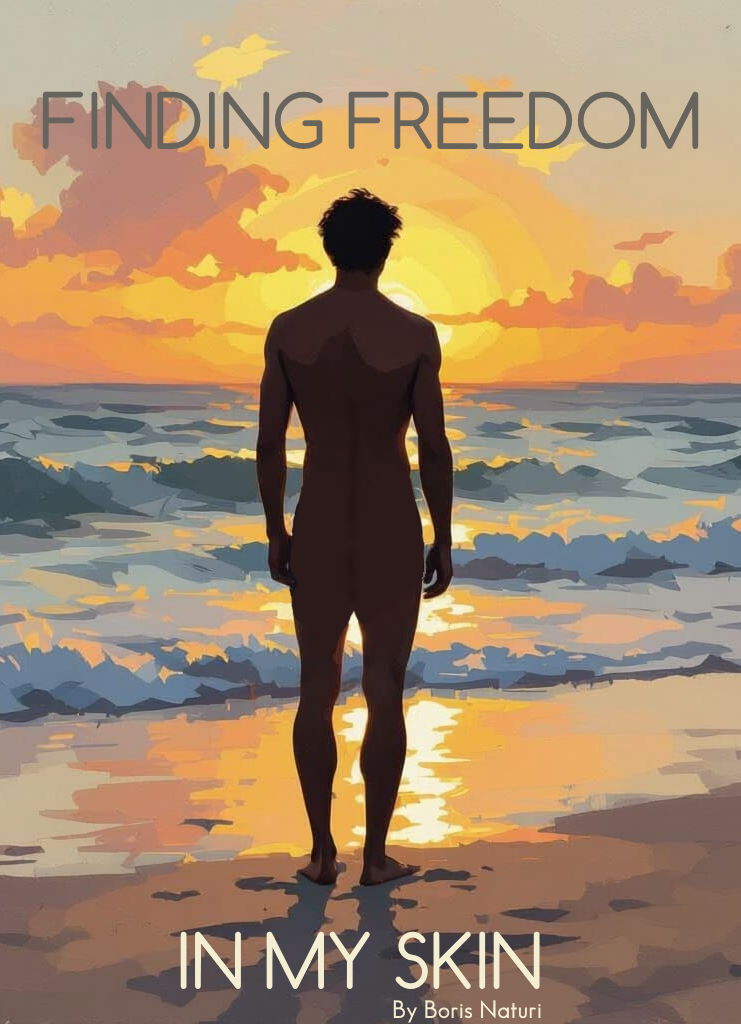
Underneath the specific discomfort about appearance is usually a more general, older question: am I allowed to take up space, be seen, and exist without managing other people’s reactions to me? Boris Naturi’s Finding Freedom – In My Skin traces this question from childhood self-consciousness through to a settled, ordinary comfort, and it’s a useful mirror for anyone in the middle of that same process — a reminder that the discomfort is common, temporary, and, for almost everyone who pushes through it, worth it.
If you’re near the start of that process yourself, our Naturism for Beginners guide sets out some practical, low-pressure ways to begin.