This article provides general information, not legal advice. If you need certainty for a specific situation, consult a solicitor or British Naturism’s own legal guidance.
The short answer is: yes, public nudity is not, in itself, illegal in England and Wales. There is no specific criminal offence of simply being naked in public. This surprises a lot of people, but it’s well established and has been confirmed in several court cases over the years, including cases involving individuals who walked significant distances across the country unclothed without being charged with an offence relating to the nudity itself.
Where it actually gets complicated
What can be an offence is the manner and intent behind nudity, not the nudity itself. The relevant law in England and Wales is largely the Public Order Act 1986, which covers behaviour likely to cause harassment, alarm or distress, and the Sexual Offences Act 2003, which covers exposure carried out with the intent to cause alarm or distress, or for sexual gratification where someone hasn’t consented to see it. In other words: context and intent are what the law actually looks at. Nudity on a recognised naturist beach, among people who’ve chosen to be there, is a fundamentally different legal situation from deliberately exposing yourself to someone on a train.
Scotland has its own legal framework, generally covered by breach of the peace and related public order provisions, with a broadly similar practical effect: nudity that isn’t intended to alarm or distress, in a context where it isn’t likely to, is very rarely prosecuted.
Why naturist beaches and clubs exist as they do
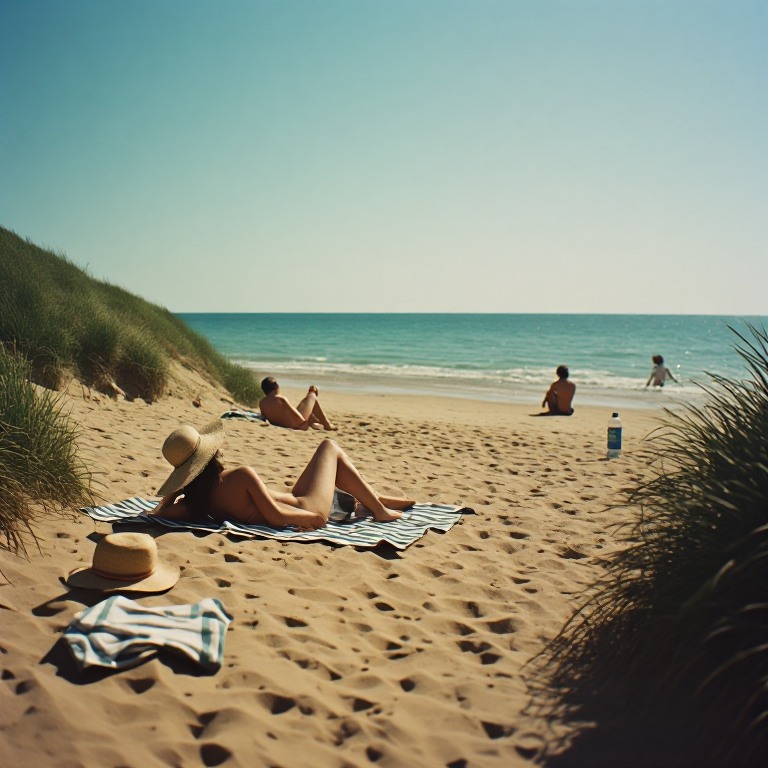
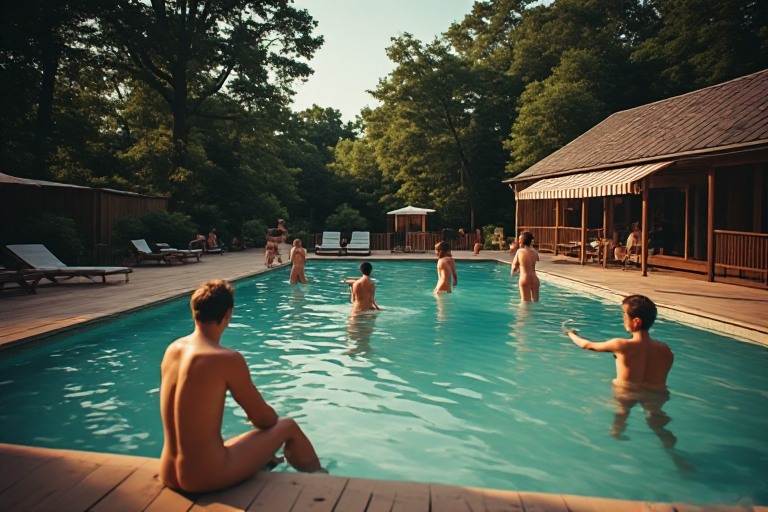
Recognised naturist beaches don’t typically have any special legal status — they’re usually ordinary public beaches where nude use has become long-established custom, sometimes with informal local authority tolerance, sometimes simply through decades of unbroken practice. Naturist clubs and holiday parks, by contrast, are private premises, and can set their own rules exactly as any private venue can. This is part of why the club and holiday-park side of UK naturism has stayed so stable: it doesn’t depend on ambiguous public tolerance in the way a beach does.
The practical takeaway
If you’re nude in a well-established naturist context — a recognised beach, a naturist club, private land with permission — you’re on very safe ground. If you’re nude somewhere unexpected, in a way likely to alarm people who haven’t chosen to encounter it, you may be creating a genuine legal problem for yourself, regardless of what you intended. The law, in short, cares about the effect on other people far more than it cares about nudity as such — which is a more sensible starting point than most people assume before they look into it.
For the wider cultural question of why nudity provokes such disproportionate alarm in the first place, see our article on why we’re so uncomfortable with nudity.