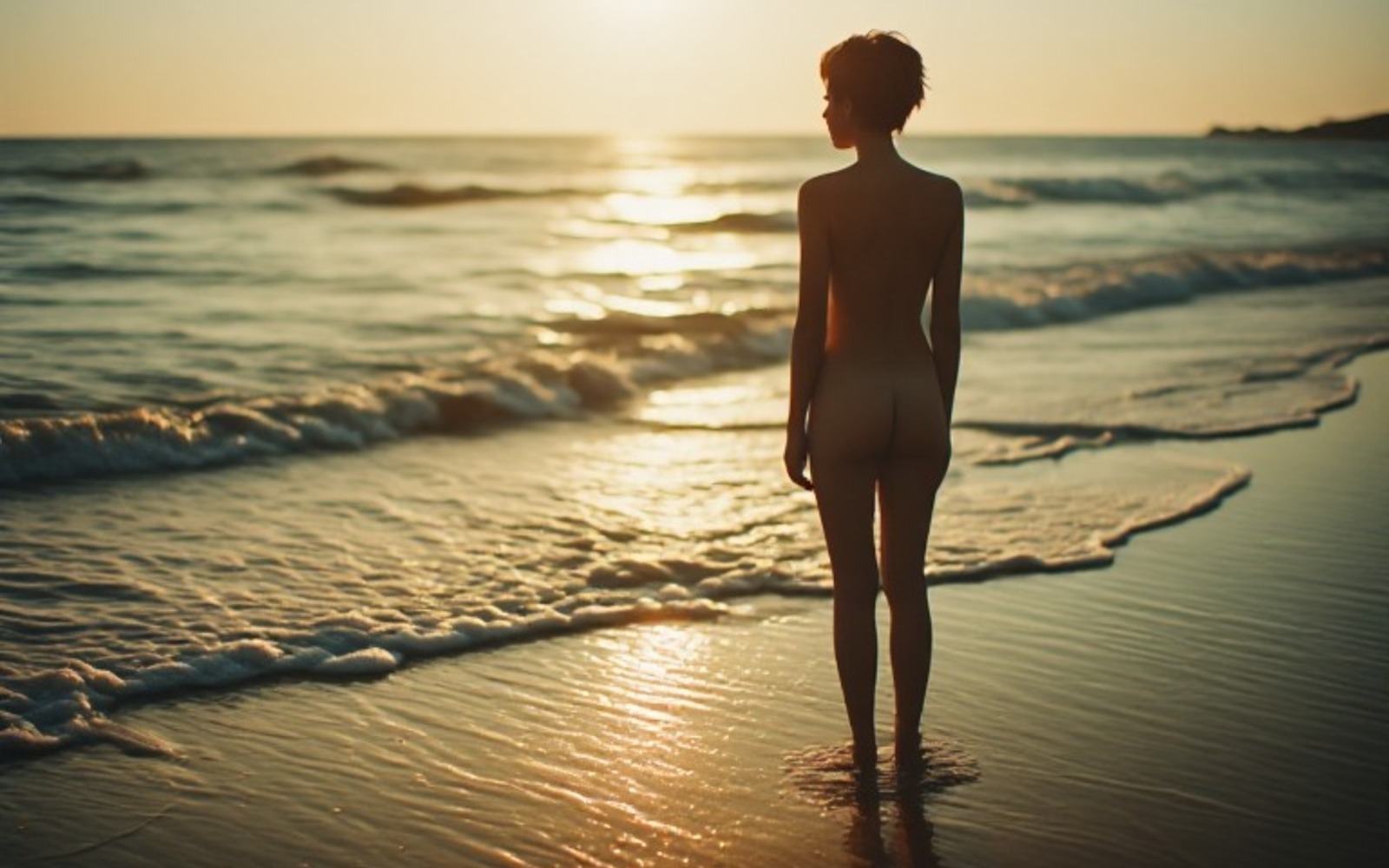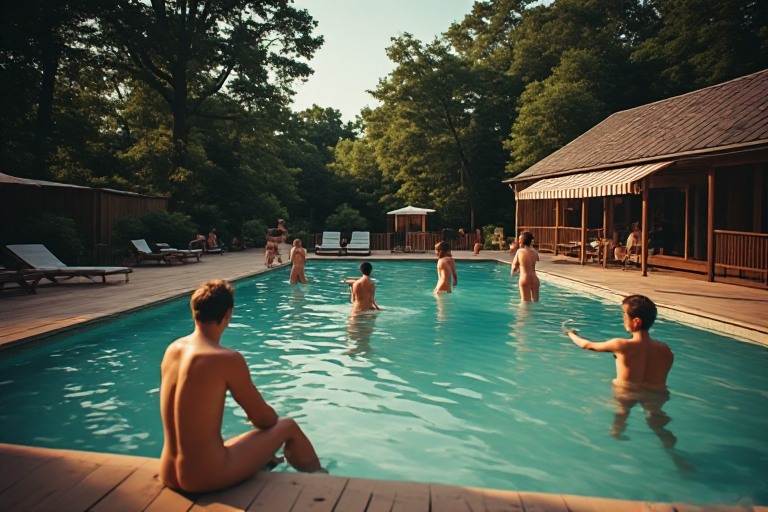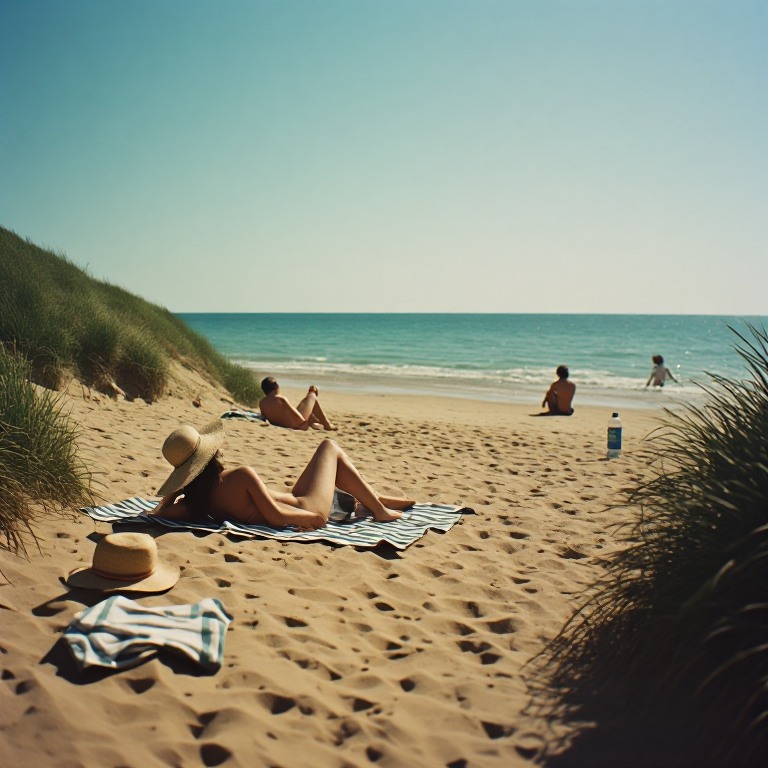
The UK has more official and unofficial naturist beaches than most visitors expect — from Studland Bay in Dorset, one of the largest and best-known, to smaller, quieter stretches around Cornwall, Norfolk, Pembrokeshire and the Scottish coast. Most share the same basic shape: a clearly understood section of an otherwise ordinary beach where nude sunbathing and swimming is customary and accepted, usually marked by discreet signage, and often self-regulating through simple social convention rather than any formal barrier.
What actually happens there
Overwhelmingly: people lie on towels, read, swim, chat, apply sun cream, eat sandwiches, and watch their children build sandcastles — nude. The atmosphere at a well-established naturist beach is usually calmer and more relaxed than a textile (clothed) beach nearby, partly because everyone present has actively chosen to be there and understands the same unwritten rules. Staring is considered rude. Photography is generally not acceptable without clear consent, and most naturist beaches have an understood no-camera norm. Sexual behaviour is not tolerated and is, in practice, rare to non-existent — naturist communities tend to be quick to challenge anyone who treats the space as something other than what it is.
Practical etiquette
- Bring a towel to sit on. It’s basic hygiene and near-universal practice.
- Undress once you’re within the naturist section, not before — and get dressed again before leaving it if you’re walking back through a clothed area.
- Sun cream matters more than usual. Skin that isn’t normally exposed burns faster; reapply more often than you think you need to.
- Eye contact, not body-scanning. Talk to people’s faces. It sounds obvious, but it’s the single biggest thing that makes newcomers feel comfortable or uncomfortable.
- You don’t have to be fully nude. Most naturist beaches are relaxed about people undressing gradually, or keeping a sarong or shorts on while they get comfortable.
Tides, access and the practical stuff
UK naturist beaches are often in less accessible spots — a longer walk from the car park, a section past a headland, or a stretch only exposed at low tide — partly by circumstance and partly because that relative privacy is part of what makes them work. Check tide times before you go, bring water and food since facilities are often minimal, and don’t expect a beach café at the naturist end.
First-timer nerves
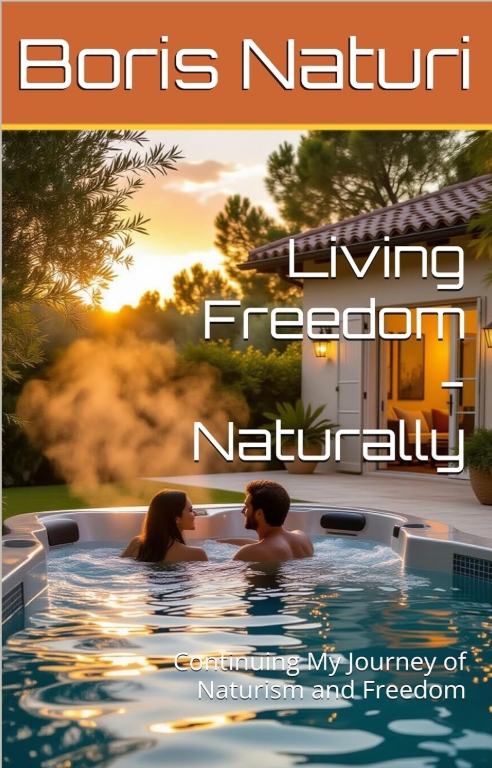
Almost everyone who has ever visited a naturist beach for the first time describes the same arc: a nervous walk in, a strange five minutes of self-consciousness, and then — often within half an hour — a surprising ordinariness to the whole thing. Boris Naturi describes exactly this shift, beach by beach, in Living Freedom – Naturally, and it’s worth reading if the anticipation is the part that’s putting you off. For a broader, calmer starting point, see our Naturism for Beginners guide, and for a list of recognised locations, our UK Naturist Beaches page.